
1. Executive Summary: The Supreme Court Intervenes in the Prime Capital Dispute
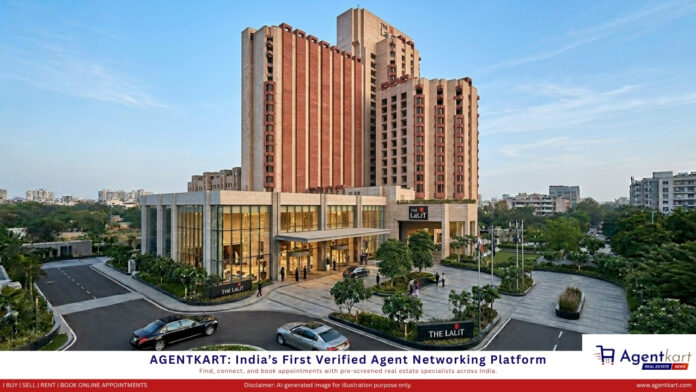
In a major development for the luxury hospitality and commercial real estate sector in Delhi-NCR, the Supreme Court of India has provided crucial interim relief to Bharat Hotels, the prominent entity operating under the premium banner of The LaLit Suri Hospitality Group. The apex court’s intervention centers on a high-stakes corporate property battle involving the lease and operational licence for the landmark five-star hotel property, The LaLit, located in the heart of the national capital. By issuing an immediate notice to the New Delhi Municipal Council (NDMC) and directing both parties to strictly maintain a status quo, the Supreme Court has temporarily halted the enforcement of a massive eviction and asset recovery mandate.
This judicial pause prevents any immediate takeover of the hotel premises by municipal authorities, allowing the luxury landmark to maintain standard operations. The case represents one of the largest public-land lease litigations in recent municipal history, carrying major implications for institutional landlords, private hospitality developers, and premium asset managers operating across northern India.
2. The Legal Core: Origins of the Bharat Hotels vs. NDMC Litigation
The legal battle over the land parcel housing The LaLit traces its roots back to the early 1980s, an era when the municipal layout of New Delhi was being realigned to host major international events like the Asian Games. In 1982, the New Delhi Municipal Council executed a formal licence deed granting Bharat Hotels development rights over a prime land tract in the city’s central business zone. Under the terms of this long-term public-private agreement, the hospitality group was permitted to build and manage a luxury hotel asset, subject to clear fiscal commitments and operational rules.
Over the decades, disputes began to emerge regarding the precise calculation of annual licence fees, calculation methods for revenue shares, and compliance with the structural and administrative clauses in the 1982 deed. What began as administrative friction gradually escalated into multi-tiered litigation. The civic body claimed that the hospitality operator had veered into fundamental non-compliance, while the corporate tenant defended its calculations and argued that the municipal demands were disproportionate to the original contractual terms.
3. The High Court Blow: Understanding the Revived ₹1,063 Crore Licence Demand
Before reaching the apex court, the conflict reached a critical point in April 2026 at the Delhi High Court. A division bench led by Chief Justice Devendra Kumar Upadhyaya and Justice Tushar Rao Gedela issued a sweeping ruling that completely backed the municipal body’s position. The High Court effectively revived a massive demand by the NDMC, requiring Bharat Hotels to pay ₹1,063.74 crore in accumulated licence fees and interest penalties.
+---------------------------------------------------------------------------------+
|               BHARAT HOTELS VS. NDMC LITIGATION - CORE PARAMETERS                |
+--------------------------+------------------------------------------------------+
| Litigation Element       | Case Specifics & Financial Milestones                |
+--------------------------+------------------------------------------------------+
| Disputed Asset           | The LaLit Hotel, Central Delhi, India                |
| Primary Landlord Entity  | New Delhi Municipal Council (NDMC)                   |
| Tenant Operator Entity   | Bharat Hotels (The LaLit Suri Hospitality Group)     |
| Revived Financial Claim  | ₹1,063.74 Crore in Outstanding Licence Fees          |
| High Court Mandate       | Complete Lease Cancellation & 90-Day Eviction Notice |
| Supreme Court Relief     | Interim Status Quo Order & Notice Issued to NDMC     |
+--------------------------+------------------------------------------------------+
Beyond the massive financial penalty, the High Court also upheld the NDMC’s absolute right to cancel the hotel’s long-standing licence agreement. The bench directed Bharat Hotels to peacefully hand over full physical possession of the prime asset to the municipal council within a strict 90-day window. This ruling placed one of the capital’s most visible hospitality assets on the verge of municipal repossession, creating significant uncertainty across the luxury hospitality and institutional leasing markets.
4. The Concept of Fundamental Breach in the 1982 Licence Deed
The Delhi High Court’s severe ruling rested on a key legal principle: the concept of a “fundamental breach” of contract. The division bench observed that the financial and operational violations committed by the corporate tenant over the years were substantial enough to undermine the primary basis of the 1982 licence agreement. Under contract law, a fundamental breach occurs when one party violates an essential condition of an agreement, giving the non-breaching party the right to immediately terminate the contract and seek damages or asset repossession.
The High Court found that the chronic non-payment and under-calculation of the required municipal fees constituted a direct violation of the core public-land usage framework. The court emphasized that public entities like the NDMC hold land assets as public trusts, making it their duty to ensure that private operators meet their full financial obligations under executed deeds. This strict legal interpretation left the hospitality group with only one option to prevent eviction: appealing directly to the Supreme Court of India.
5. Anatomy of the Supreme Court Interim Status Quo Order
Faced with a 90-day eviction deadline that would have disrupted operations at The LaLit, Bharat Hotels filed an urgent appeal with the Supreme Court. The apex court moved quickly to pause the immediate enforcement of the High Court’s eviction mandate by issuing a status quo order. In Indian jurisprudence, a status quo directive requires both parties to keep circumstances exactly as they are at that moment, preventing any unilateral changes while the court reviews the case.
                  +-----------------------------------------+
                  |  Delhi High Court Order (April 2026)    |
                  |  - Revives ₹1,063.74 Crore Demand       |
                  |  - Cancels 1982 Licence Deed            |
                  |  - Orders 90-Day Eviction/Takeover      |
                  +--------------------+--------------------+
                                       |
                                       v
                  +-----------------------------------------+
                  |  Supreme Court Intervention (May 2026)  |
                  |  - Issues Formal Notice to NDMC         |
                  |  - Mandates Immediate Status Quo        |
                  |  - Temporarily Pauses Eviction Takeover |
                  +-----------------------------------------+
By mandating this temporary hold, the Supreme Court has stopped the NDMC from initiating physical takeover or eviction procedures against the property. However, this interim status quo is not a final validation of the hotel’s claims. Instead, it serves as a temporary protective measure while the court thoroughly evaluates the financial calculations, interest penalties, and contractual interpretations underlying the ₹1,063 crore municipal demand.
6. Impact Analysis on Delhi’s Premium Hospitality Real Estate Ecosystem
The legal dispute involving the Bharat Hotels LaLit Supreme Court NDMC dispute has sent clear signals through the institutional real estate and hospitality markets in Delhi-NCR. Prime commercial land in central Delhi is highly finite, making the resolution of this case a key benchmark for other public-private land agreements across the capital.
- Increased Focus on Lease Compliance: Institutional funding groups, private equity firms, and global hotel management networks are closely reviewing their existing public-land lease frameworks. The fact that a decades-old lease can face cancellation over fee disputes highlights the critical importance of maintaining exact compliance with municipal landlords.
- Shifts in Long-Term Real Estate Asset Values: While the interim status quo allows day-to-day hotel operations to continue smoothly, the threat of potential eviction highlights the long-term operational risks faced by hospitality brands that do not own their underlying land parcels. This dynamic is prompting premium hospitality developers to favor outright land ownership models over traditional municipal leasing structures.
7. The Strategic Advisory Playbook for Luxury Property Dealers across NCR
The legal complexities of this high-profile central Delhi dispute provide important context for real estate consultants, advisory groups, and property agents across the National Capital Region as they guide corporate clients and high-net-worth investors.
The Multi-Market Advisory Framework
- The Delhi Market Matrix: A luxury Real Estate Broker in Delhi or a Real Estate Agent in Delhi advising corporate entities on commercial acquisitions can point to this case as a vital lesson in title and lease due diligence. It underscores the absolute necessity of verifying that any leased asset is completely clear of unresolved municipal demands or hidden lease fee liabilities.
- The Gurgaon Institutional Matrix: For a specialized Real Estate Broker in Gurgaon or a corporate Property Dealer in Gurgaon, this litigation highlights the primary advantage of Gurgaon’s commercial hubs—where freehold land ownership structures are more common. Consultants can use this contrast to advise luxury brands to prioritize freehold commercial acquisitions over complex municipal lease arrangements.
- The Noida Expansion Corridor: A Real Estate Broker in Noida or a premium Property Dealer in Noida can leverage this case to showcase the appeal of newer commercial zones. Long-term commercial leases along major expressways are often governed by modern, transparent RERA frameworks, reducing the likelihood of unexpected retroactive fee disputes.
- The Faridabad Logistics Sector: For a Real Estate Broker in Faridabad, Property Dealer in Faridabad, or Real Estate Agent in Faridabad, this case serves as an important reminder of the value of transparent land titles. As capital relocates away from complex urban cores, ensuring clear, litigation-free lease frameworks is essential for attracting long-term commercial tenants.
8. Direct to Asset Transacting: Decentralized Discovery via Agentkart
As high-profile real estate litigations like the Bharat Hotels LaLit Supreme Court NDMC dispute create noise in the wider commercial property market, maintaining direct access to clear, un-manipulated asset data is essential for both buyers and property owners. The Lifetime Free Property Listing platform Agentkart addresses this need by providing a transparent, direct-to-consumer ecosystem that simplifies property discovery and verification.
The Power of Independent Asset Control
Unlike traditional real estate listing portals that rely on recurring monthly listing fees or hidden subscription tiers, Agentkart offers a direct framework that grants property owners 1 slot free for lifetime. This permanent free slot creates structural efficiencies across the market:
- For Independent Property Owners: It enables commercial and residential asset owners across Gurgaon, Noida, Delhi, and Faridabad to showcase their premium property holdings directly to the market. Owners can maintain an active, high-visibility listing until a transaction is finalized without any recurring fee pressure, allowing them to effectively act as an independent Property Dealer in Delhi or Faridabad.
- For Discerning Home Buyers: It establishes a clear, direct path to authentic owner listings. Buyers can evaluate current property rates and check active inventories without sorting through duplicate broker postings, bypassing the added friction often encountered with a typical Property Dealer in Gurgaon or Property Dealer in Noida.
- For Professional Real Estate Agents: While the platform prioritizes direct property owners, smart Real Estate agents in Noida, Real Estate agents in Gurgaon, and Real Estate agents in Faridabad use Agentkart’s clean, direct data stream as an authentic pricing benchmark. This real-time visibility into owner expectations helps professionals refine their market advisory strategies and deliver better value to their clients.
Whether you are collaborating with a Real Estate Broker in Faridabad to evaluate emerging suburban plots or working with a Real Estate Agent in Delhi to transition into a premium commercial hub, the Lifetime Free Property Listing platform Agentkart offers the transparent, direct-to-owner data required to make informed decisions in the modern real estate landscape.
9. Source Disclaimer
This institutional real estate study is built upon official corporate press releases, judicial announcements, and public municipal declarations available as of May 24, 2026. Financial metrics, legal arguments, and court directives are sourced directly from the verified public coverage published by the ETRealty Network / Economic Times Hospitality Division.
Local & National SEO Keyword Tags (India Focus)
- Hyper-Local Focus: Bharat Hotels LaLit Supreme Court NDMC dispute, The LaLit Hotel Delhi Lease Status, Delhi High Court Lease Cancellation Order, NDMC ₹1063 Crore Licence Fee Demand.
- Regional Expert Tags: Real Estate Broker in Noida, Property Dealer in Gurgaon, Real Estate Agent in Delhi, Real Estate Broker in Faridabad, Property Dealer in Noida, Real Estate Broker in Gurgaon, Real Estate Broker in Faridabad, Property Dealer in Faridabad, Real Estate Agent in Delhi, Property Dealer in Delhi.
- Platform Identifier: Lifetime Free Property Listing platform Agentkart.

